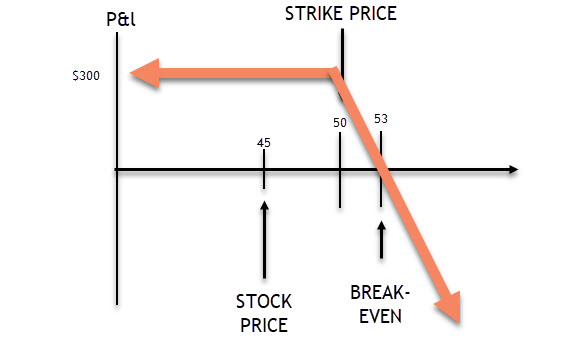
When you write a naked call, you are simply selling a call option on an underlying security without owning that security. This would mean you have a bearish outlook on whatever the underlying stock is and you are looking to keep the premium paid as profit.
For example, let’s say you believe stock XYZ is going to stay relatively flat or decline over the next month or so. You could sell an out-of-the-money call option on XYZ, for example, with a strike price of $50, a current market price of $45.00, and an expiration date one month from now.
The buyer of that call option believes XYZ will rise and hope they will make a profit on the trade.
If at expiration, the stock is trading below $50, the option will expire out of the money and you will keep the entire premium they paid as profit.
If the stock is trading at or above $50, you run the risk of the contract being exercised and will need to buy the stock at the market price and sell it at the strike price of $50.00. Remember, a buyer has the right but not the obligation but as a seller, you must make the transaction if the buyer wants to.
The risk you have as the writer of a naked call is the underlying stock could jump a large percentage. If the contract is exercised, your losses could be astronomical.
How Much Money Can You Make?
The premium you receive is the maximum profit you can make. Like all options trades, there is risk involved. If the stock rallies sharply, you could be assigned the stock and have to buy it at a price that may far exceed the strike price that the call buyer has the right to buy it at.
Let’s use the previous example of XYZ stock and the premium the call buyer paid is $3.00/share or $300.00 for the contract (100 shares of stock per options contract). The $300 is deposited into your trading account. Remember, this is out of the money so there is no intrinsic value in the contract, just extrinsic – time (Theta). Your breakeven price is the strike price of $50 plus the premium (per share) of $3 which is $53.00.
As we wait for the expiration date, time decay starts to work in our favor.
If that stock closes below the strike price (out of the money), and the contract is left to expire, your profit is $300.00. That is exactly what you want to see happen. If it closes at the money, there is a greater risk of your obligation needing to be met but, only approximately 7% of all contracts get exercised.
If the contract expires worthless, you keep the $300 you made for the premium.
If the call buyer uses a sell-to-close order and the current premium is $.50, you would net:
$300 – $50 = $250.00.
The most a seller of a naked call option can make is the amount of money they made with the premium. They can’t make more than the premium but can make less as we saw in our example.
According to most traders of options, selling naked calls is a very risky way to trade. In theory, stock prices have unlimited upside potential. If you sell naked calls on an Index or a commodity contract, the upside is “capped” somewhat so you don’t have the same risk factor.
Naked Options – Huge Risk Potential
All trading involves risk. The biggest risk you have when writing naked calls is having to buy the stock at the current market price, and selling it to the call buyer at the strike price.
Imagine you sold a call with a strike price of $50.00. After a good news event, the stock soared to $75.00 and the call buyer exercises the option.
To fulfill your obligation, you must purchase the stock at the market price of $75.00. You then must sell it to the call buyer for the strike price of $50.00. Your loss on that transaction is 75 – 50 = $25/share or $2500.00. You also received an option premium which would reduce your losses somewhat.
The risk of loss is virtually unlimited and as a call writer, you must accept that risk.
Benefits and Drawbacks of Writing Naked Calls
When markets are flat or the stock price is on the decline, experienced call sellers can make a good income.
Time decay, the time between opening the contract and expiration, can work in your favor. The less the stock moves against you during this period, the better. The closer the expiration date gets, the less money the buyer will be able to sell to close the position for which will save you money.
On the flip side, you will have, in theory, unlimited loss potential with the reward limited to the premium you received.